CTO

A single device that is not wiped correctly before disposal can expose your business to data breach liability long after it has left your premises. Poor asset disposition practice can trigger compliance and reputational harm years later, often when you least expect it.
A data breach doesn't need a hacker to start it; it can begin with a hard drive that leaves the building without being wiped. That one gap can cost a business fines, lost contracts and years of rebuilding trust.
Most people think of IT asset management as tracking laptops, servers and mobile devices while they're in active use. That picture is incomplete, because the real test arrives at the end of an asset's life, when it leaves the building for good and nobody is watching it any more.
Handled properly, IT asset management follows every device from purchase to disposal, not just through its working years. Skip that final stage and a single device slipping through unattended can leave consequences that surface years later.
A hard drive or server that isn't wiped correctly before resale or recycling can still hold sensitive data intact. That data doesn't disappear with the device; it can resurface long after the business considers the matter closed. For that reason, a strong asset management process matters as much for reputation and compliance as it does for efficiency.
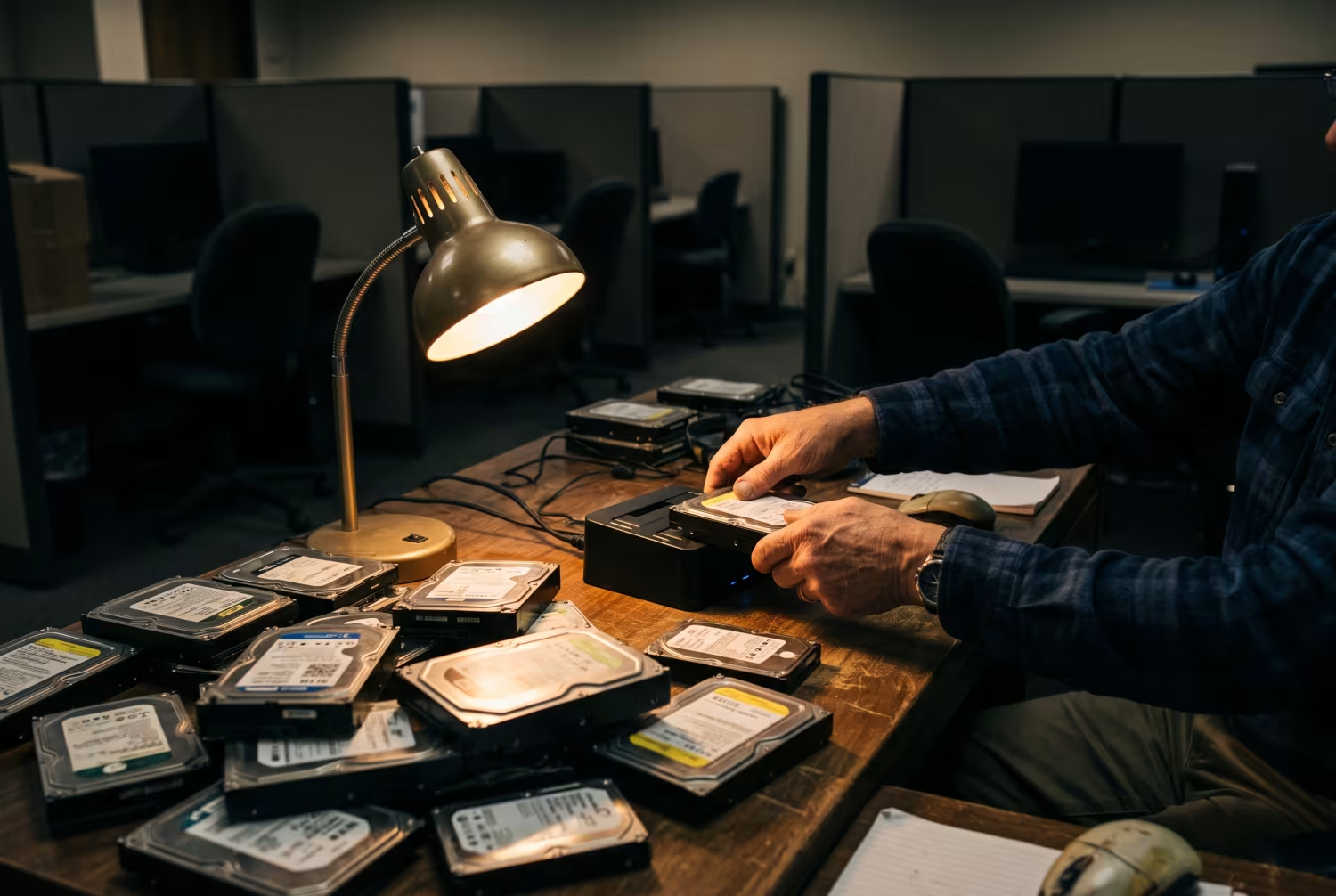
Most businesses concentrate on squeezing value from hardware and software while they're still in use, which is understandable but incomplete. The question that gets skipped is what happens when a device is finally retired, and that gap is exactly where risk collects. Asset disposition - removing, wiping and disposing of old equipment - looks routine on paper, yet it's often where the biggest exposure hides.
Send a laptop or server off without a proper data wipe, and whatever information remains becomes accessible to whoever receives it next. That turns a technical oversight into a legal and reputational problem at once. Regulations in London and across the UK require businesses to handle data securely even at the end of an asset's life, so failing to do so risks fines, investigations and a loss of trust from customers and partners.
Compounding that, the fallout rarely appears straight away. A breach traced to an old device can surface years after disposal, catching a business off guard when it least expects scrutiny. That delay is precisely why asset disposition deserves the same attention as any other stage of the asset lifecycle.
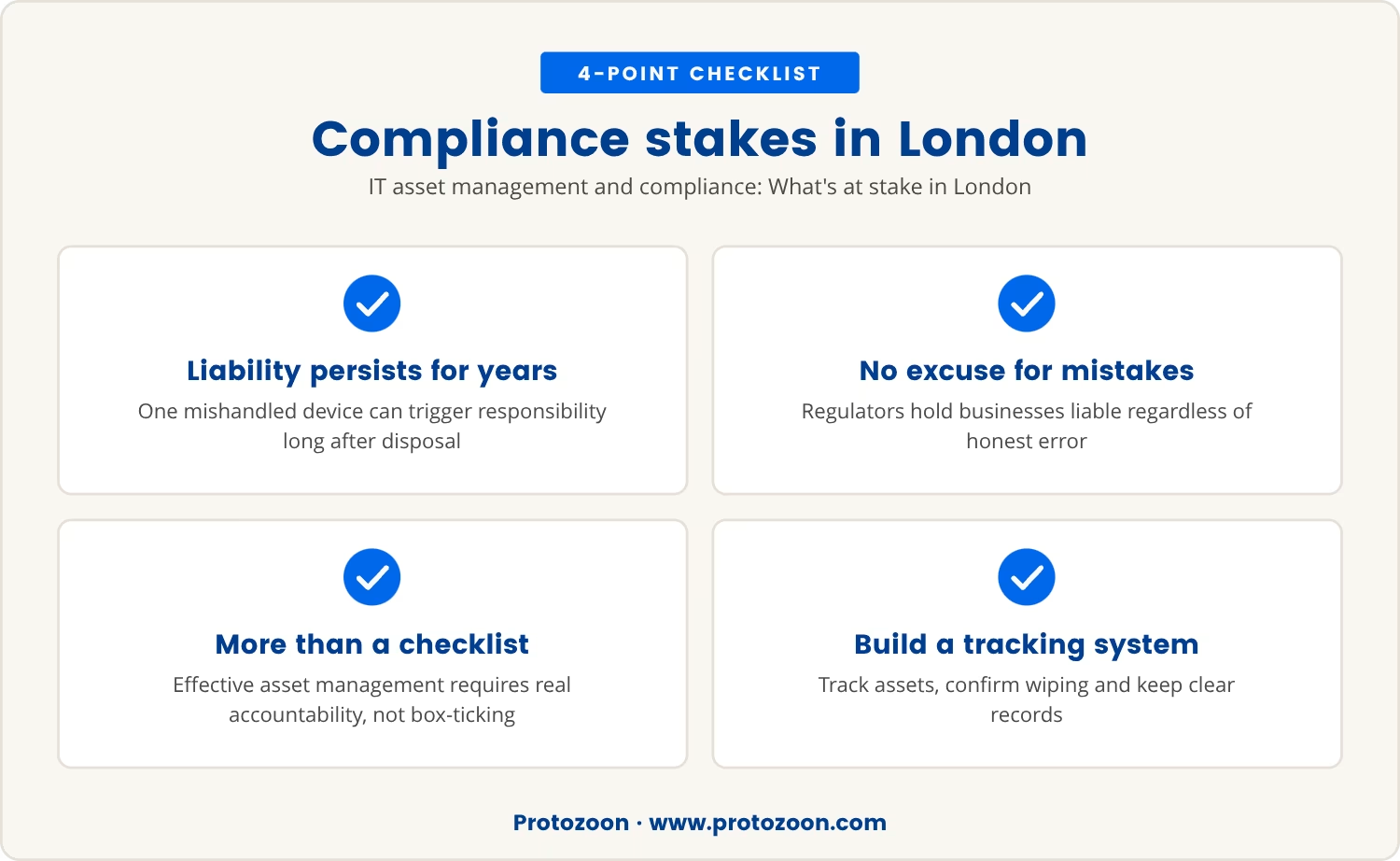
It takes only one missed step for sensitive data to slip outside a business's control. Picture a hard drive meant to be wiped but never was: if it's sold or recycled, whoever acquires it can reach everything stored there, from emails to financial records to client information.
That exposure carries consequences well beyond regulatory fines. It can mean lost contracts, damaged relationships and negative press, and because data can't be recalled once it's out, the reputational damage tends to outlast the incident itself.
Relying on managed IT solutions or outside IT service providers doesn't remove the need for scrutiny. Their processes need to be airtight, which means asking for clear evidence - not assumptions - that every asset was properly wiped and documented before it left anyone's control.
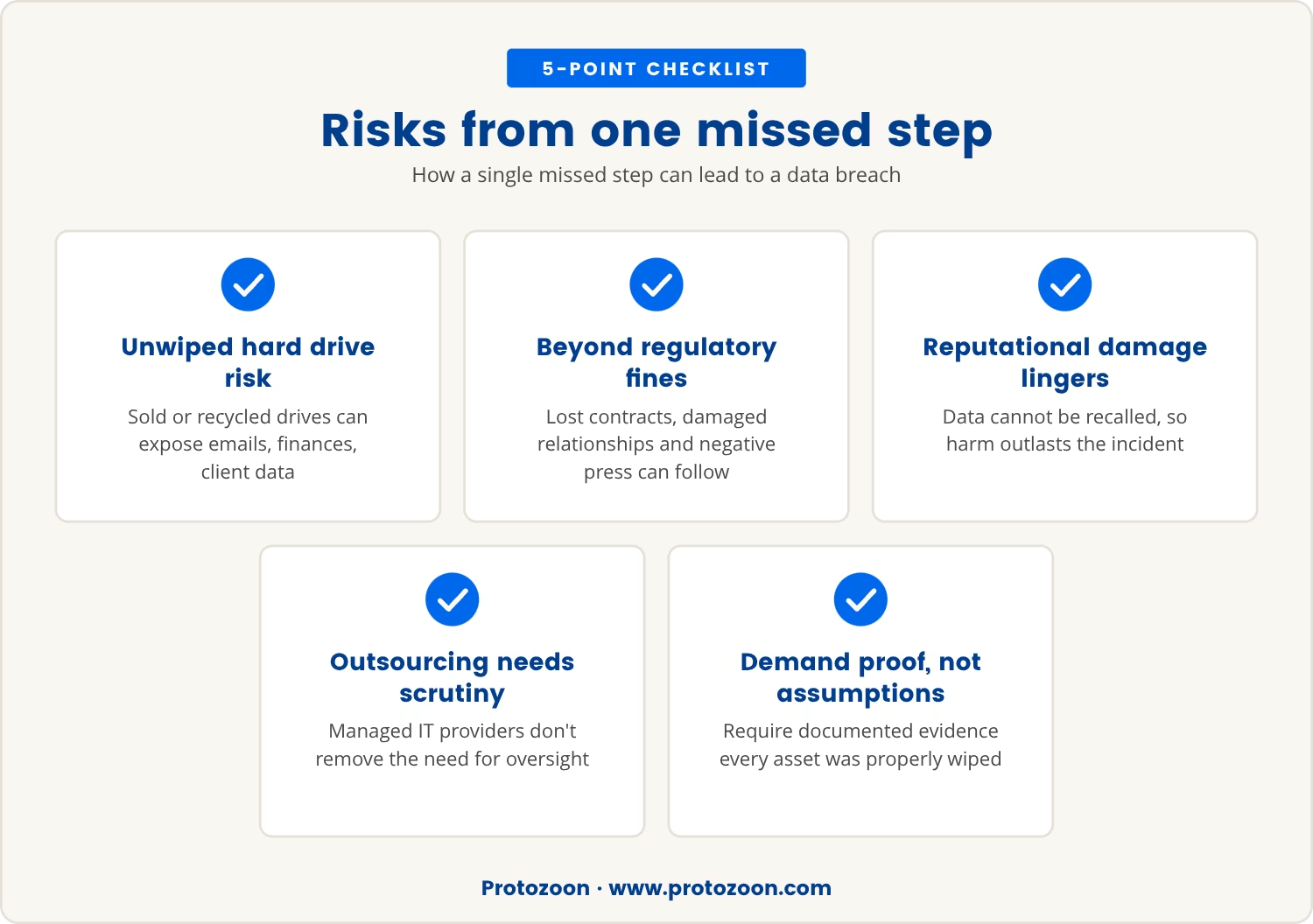
Businesses in London operate under strict rules on data protection and compliance. The General Data Protection Regulation (GDPR) and other local laws require safeguarding personal and business data at every stage, disposal of old equipment included.
Mishandle a single device, and the organisation can be held responsible for any resulting breach, even years after the asset has left the premises. Regulators draw no distinction between an honest mistake and a process gap; the liability stays with the business either way.
That liability is what makes effective IT asset management more than a checklist exercise. It means building a system that tracks every asset, confirms proper data wiping and keeps clear records of what was done, because without that structure, compliance failures become both costly and damaging.
The asset management process runs from acquisition through to disposal, but it's at that final stage - asset disposition - where mistakes are most likely to surface. Here's how problems tend to slip through.
Fail to track every asset and one can go missing during disposal without anyone noticing. That gap is enough to leave sensitive data exposed.
Without clear records of what was wiped and when, proving compliance under questioning becomes impossible. Auditors and regulators expect detailed logs as standard.
Busy staff relying on manual steps can miss actions as critical as data wiping. Automation helps, but only when it's set up correctly from the start.
A team that doesn't grasp why secure asset disposition matters is more likely to skip steps or make mistakes. Training closes that gap for everyone involved.
Trusting that a device was wiped isn't the same as knowing it. Verification - proof the data is truly gone - has to happen before the asset leaves the building.
Handing asset disposition to a third party carries its own risk if their processes go unchecked. Certificates of data destruction and regular audits of their work should be non-negotiable.
Avoiding these hidden risks doesn't require reinventing the process, just following it consistently. A few practical steps make the difference:
Following those practices consistently is easier with the right tools behind them, which is where ITAM software earns its place. It does more than log assets; it provides a single source of truth for asset data, making the entire lifecycle - secure disposal included - far easier to manage.
With the right management systems in place, many of the steps most prone to human error can be automated: tracking which assets still need wiping, generating certificates of destruction, and keeping all documentation in one place. Together, those features make it considerably easier to prove compliance during an audit or a breach investigation.
Choosing the right ITAM software is, in that sense, an investment in the business's future. It guards against the long-term risks that overlooked or mishandled assets create, protecting data and reputation at the same time.
The consequences of a single unwiped drive can stretch far beyond the day it leaves the building. Years later, a breach traced back to that business can trigger investigations, fines and a loss of trust that takes far longer to rebuild than it took to lose.
That long tail is exactly why every step in the asset management process matters, not just the ones that are easy to see. Paying attention to asset disposition and relying on dependable systems heads off the unexpected consequences that catch so many businesses off guard. Getting it wrong costs far more, in the end, than the effort it takes to get it right.

Many businesses with 1 to 40 users find themselves unsure if every device leaving their office is truly safe from data leaks. At Protozoon, we understand how easy it is for one missed step to put your compliance and reputation at risk.
If you want to see how we approach secure asset disposition or want to talk through your current setup, we invite you to start a conversation with our team.
If you’re still paying your old managed service provider, we’ll cover up to 1 month of your remaining charges while you transition to us.
[.mspl-button-text]Claim your transition credit[.mspl-button-text]
Look for features that track every asset, automate data wiping and keep detailed records, alongside reporting and certificates built for compliance audits. Integration with existing systems and a user-friendly interface make it far easier for a team to stick to best practices.
A secure process includes clear protocols for wiping data, documentation of every step and regular audits, with proof available that each device was properly wiped and disposed of. Where a third party is involved, certificates of data destruction and a review of their procedures should be standard practice.
Yes, ITAM supports software licence management by tracking what the organisation uses, when renewals fall due and whether vendor agreements are being met. That reduces the risk of unlicensed software and supports better-informed decisions on renewals and upgrades.
An ITAM database serves as a central record of all assets, including their status and history, which makes it far simpler to demonstrate compliance during an audit by showing exactly how each asset was managed throughout its lifecycle.
Audits at least once a year help catch gaps or mistakes before they grow into bigger problems, with more frequent checks advisable for businesses handling sensitive data or a high turnover of devices. The findings from each audit should feed back into improving the process and reducing risk further.

Matt is a technology and cybersecurity expert with extensive experience in networks, compliance, data security, and IT strategy. Known for his practical expertise and personable approach, he helps businesses solve technology challenges, strengthen security, and plan for recovery.
